
Anxiety while searching for a job is not uncommon. In fact, according to one survey, 93 percent of job seekers experienced interview anxiety. This is second only to public speaking in the hierarchy of stressful life events.
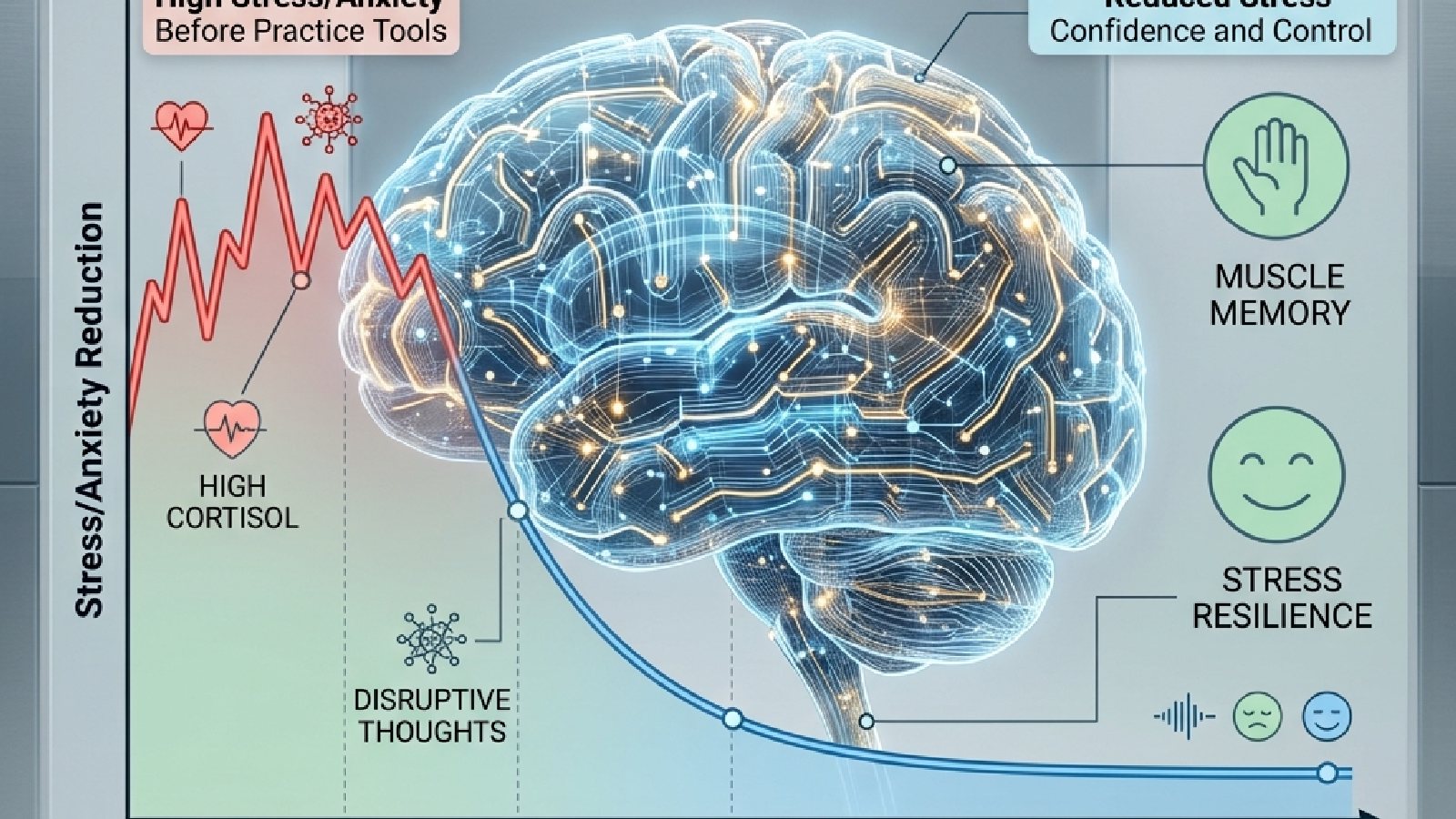
When your heart starts racing in those critical seconds before clicking “Join Call," your brain enters a primitive "fight-or-flight" scenario: the dread of freezing, stumbling, or being judged can overshadow your ability to deliver the expertise you know.
The answer is not simply to "simply relax." The trick is that by practicing with interactive smart practice, you can replace unknown anxiety-causing triggers with known repeatable responses that your brain can then manage and control. Then you can approach any assessment with a level of practiced confidence.
The Neuroscience of Interview Nerves (And Why It Happens)
Anxiety is caused by two types of psychological triggers, like fear of uncertainty and performance. The first one is connected primarily to unpredictable questions, while asking anxiety due to performance appraisal is related to the perceived danger of being judged as incompetent. Encountering unexpected questions or feeling challenged under pressure triggers the fight-or-flight response in your amygdala. Thus, your body produces stress hormones increasing your heart rate, quickening your breath, and redirecting blood flow to your muscles. These stress hormones make you feel tense and less able to engage your executive function during the times when you need to think clearly.
This physiological surge causes distinct symptoms:
Mental Fog: Reduced working memory capacity makes it challenging to recall essential figures during the interviewing process.
Speech Degradation: Anxiety triggers rapid, shallow breathing, leading to rushed speech, pitch cracks, or heavy reliance on filler words ("um," "like," "you know").
Camera Awkwardness: Seeing your own video preview creates hyper-self-awareness, distracting you from listening to the interviewer.
To overcome these triggers, you must expose yourself to the interview environment ahead of time until your body no longer views it as a threat.
Traditional Prep vs. Modern Smart Practice Tools
For decades, candidates relied on reading listicles of sample questions or standing in front of a mirror. While well-intentioned, traditional preparation methods fail to simulate actual interview conditions.
Preparation Factor | Traditional Prep Methods | Modern Smart Practice Tools |
Simulated Realism | Low (Talking to yourself or a friend) | High (Real-time video/audio testing environment) |
Availability | Dependent on someone else's schedule | 24/7 on-demand practice |
Objective Feedback | Subjective or biased advice | Data-backed insights on timing, pace, and clarity |
Stress Reduction | Minimal camera desensitization | High camera and environmental desensitization |
As workplaces continue switching from paper to online exams and digital evaluations, getting comfortable with digital-first evaluation environments is no longer optional; it is a core professional skill.
3 Ways Smart Practice Tools Eradicate Interview Fear
1. Camera Desensitization (Exposure Therapy)
Recording yourself answering questions under timed conditions desensitizes your brain to the camera. By performing realistic mock runs repeatedly, speaking into a webcam becomes second nature rather than a high-stakes trigger.
2. Behavioral Response Structuring
When it comes to a job interview, nerves can trigger your brain to engage in rambling. Interactive preparation helps you to master the art of concise speaking, based on the STAR Method (Situation, Task, Action, Result). It enables you to deliver clear, informative answers that are concise, even if nerves try to make you do the opposite.
3. Speech Rate and Pacing Control
Anxiety makes most people feel rushed, so modern practice platforms encourage you to pause before responding. Try to get used to taking two-second pauses in your responses so your prefrontal cortex can gather the right information without feeling panicked.
Master Your Preparation with Interview Prep Module
If you want to enter your next job interview completely composed, utilizing a dedicated practice portal like interview.proctorplus.io changes everything.
Designed as an interactive practice environment, this platform gives candidates a zero-risk space to prepare before speaking with hiring managers:
Realistic On-Screen Drills: Practice responding to technical, role-specific, and behavioral interview questions in an authentic format.
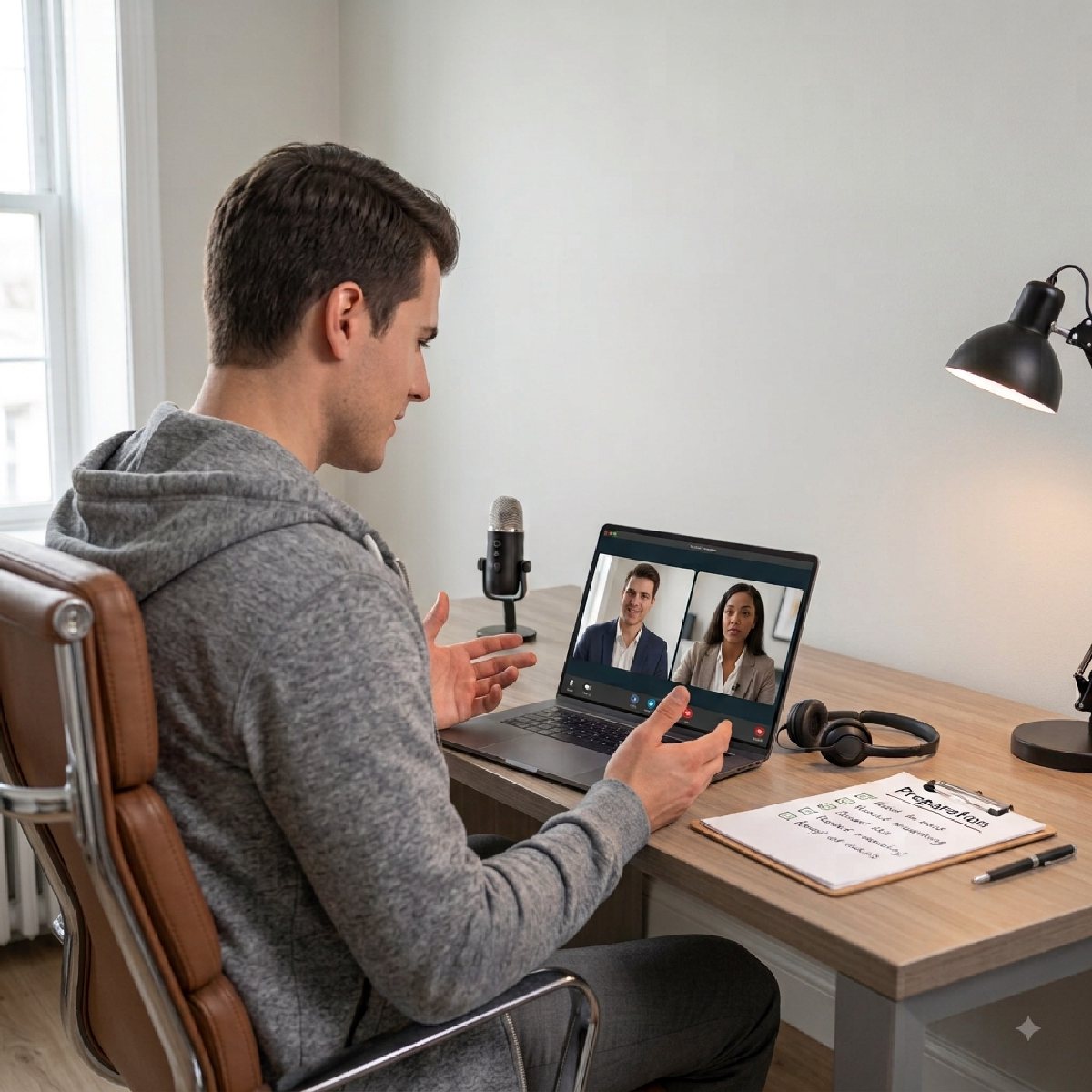
Camera & Posture Confidence: Get comfortable maintaining natural eye contact with the camera lens while managing your presence on screen.
Eliminate Technical Friction: Test your microphone, lighting, and camera setup beforehand so no technical hiccups distract you during the real evaluation.
Understanding the technology behind modern hiring assessments can also help ease your mind. For instance, knowing why basic browser plugins often glitch and why chrome extension proctoring fails in high-stakes environments helps candidates appreciate why dedicated, full-browser practice environments provide a much smoother testing experience.
Furthermore, as companies increasingly move toward an AI vs human proctoring hybrid model to balance automated checks with real human oversight, practicing on a platform built to simulate these exact conditions ensures you won't be caught off-guard by the tech.
Turning high-pressure assessments into a practiced routine, interview.proctorplus.io removes the element of surprise that fuels anxiety.
3 Rapid Mindset Shifts Before You Click "Join"
Even with thorough preparation, a slight surge of adrenaline right before an interview is completely natural. Use these science-backed techniques to channel that energy effectively:
Anxiety Reappraisal: Physiological responses for anxiety and excitement are identical (racing heart, heightened alertness). Out loud, say, "I am excited to show my work," instead of "I am nervous." This simple verbal shift primes your brain for an opportunity rather than a threat.
The Box Breathing Method: Inhale for 4 seconds, hold for 4 seconds, exhale for 4 seconds, and hold for 4 seconds. Doing this for two minutes lowers your resting heart rate.
Control the First 30 Seconds: Rehearse your introductory sentence ("Thanks for having me today...") so many times that it comes out effortlessly. A strong, calm opening sets a confident tone for the entire interview.
Turn Nerves into Career Growth
Feeling anxious before an interview doesn't mean you aren't qualified; it simply means you care about the outcome. By replacing passive reading with active, interactive practice using tools like ProctorPlus, you transform pre-interview dread into calm, polished execution.
Ready to step into your next interview with complete confidence? Visit interview.proctorplus.io today and start practicing like a professional!
Written by
Riya
Practical guidance from the ProctorPlus interview preparation team.